With El Niño conditions strengthening through 2026, there’s a good reason to start thinking about your water system before summer arrives.
No one can say exactly what the coming summer will bring. But for farmers, growers and rural homeowners, waiting until water is already tight is rarely the best plan.
NIWA’s seasonal outlooks have pointed to an increased chance of drier conditions in eastern parts of New Zealand as El Niño develops, while DairyNZ is also encouraging farmers to plan early and keep their options open as conditions change.
Now is a good time to look at where your water comes from, how much you can store, where you may be losing it and whether the equipment you rely on is ready to go.
How should you prepare your water system for a dry summer?
Start by checking the reliability of your water source, available storage and the condition of your pumping, stock water and irrigation systems. Fix leaks early, monitor usage, increase storage where practical and service irrigation equipment before demand increases. A little preparation now can make a big difference when water becomes harder to come by.
The key is not to assume your existing system will cope simply because it has in previous years. A prolonged dry spell can expose problems that aren’t obvious during winter or spring.
Make the most of your domestic water storage
If your household or lifestyle property relies on rainwater, every rainfall event matters during a dry season.
Start with the basics. Clean gutters and downpipes and make sure water can get from the roof into your tanks without restrictions. There’s not much point having plenty of roof catchment if leaves, dirt or a blocked inlet mean a decent shower of rain never reaches the tank.
It’s also worth checking:
- Tank levels and available storage capacity
- Inlet strainers and screens
- Pumps and pressure systems
- Overflow pipework
- Any obvious leaks around tanks or fittings
- Household water use and areas where consumption could be reduced
If your existing storage regularly gets low during a normal summer, think about whether there’s room to add another tank.
Extra storage won’t create more rain, but it gives you more ability to capture water when it does arrive. On some properties, adding storage can be a relatively straightforward way to provide a larger buffer between rainfall events.
For larger rural systems, WaterForce can also help assess storage, pumping, filtration and distribution as one complete system rather than looking at the tank in isolation.
Check whether your stockwater source will cope
Stockwater deserves an early look because a water source that performs well through winter may behave very differently after weeks of dry weather.
Ask yourself a simple question:
If this summer is significantly drier than normal, will my existing water source still deliver enough water every day?
Think about bores, springs, streams, dams and scheme supplies, along with the pumping capacity and storage between the source and your troughs.
If there’s any doubt, investigate alternative or supplementary sources now rather than in January.
That might mean:
- Increasing tank storage
- Developing or connecting another water source
- Adding pumping capacity
- Reviewing pipe sizes and system pressure
- Providing greater redundancy in critical parts of the system
- Changing how water is distributed around the property
WaterForce designs complete farm and stock water systems, including pumping, storage and reticulation, so it’s worth assessing the whole system rather than simply replacing the first component that causes trouble.
Find leaks before they become expensive
A small leak can go unnoticed for weeks when water is plentiful. In a dry period, that same leak can become a serious problem.
Check trough valves, buried pipelines, tank connections and pump systems for signs of unexplained water loss.
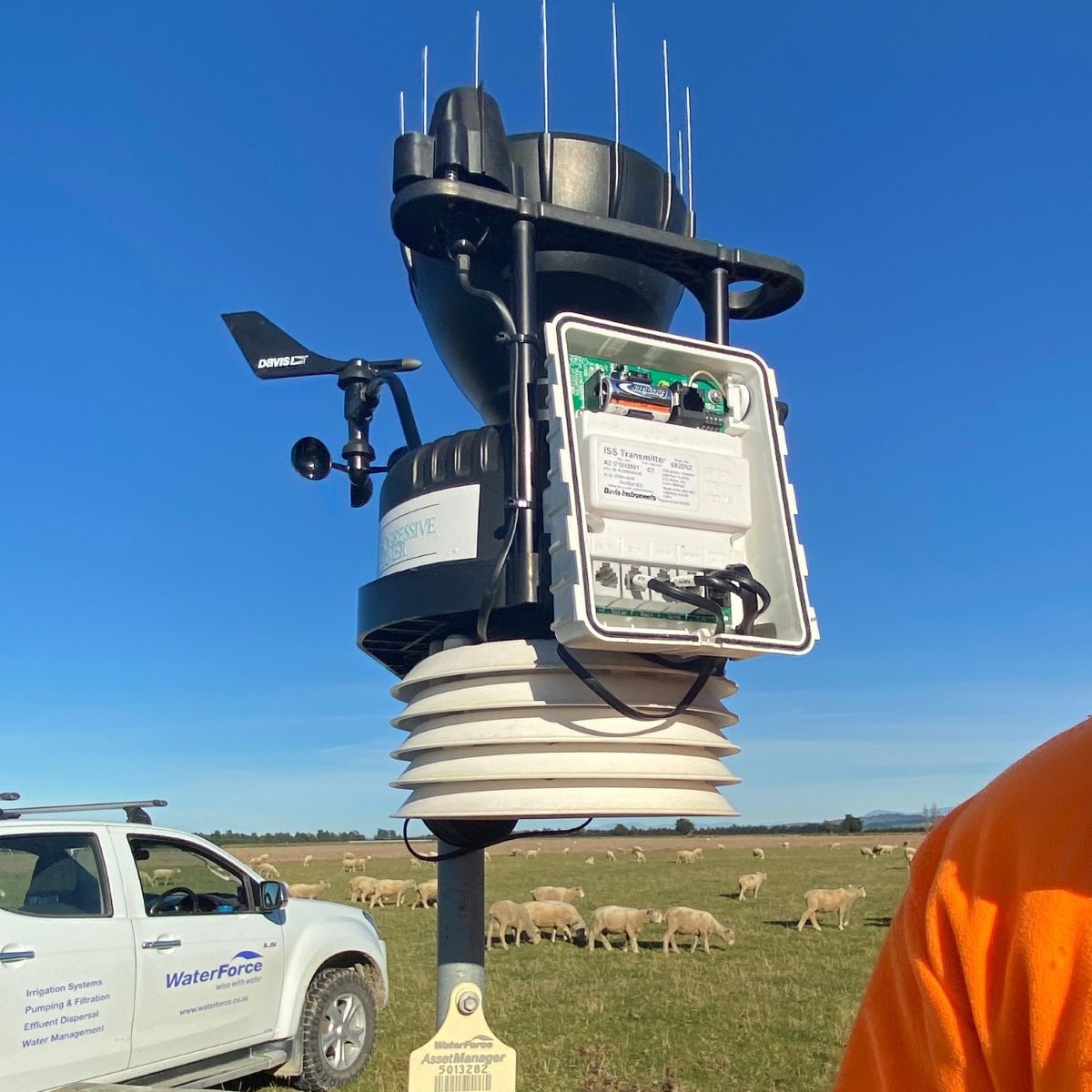
Water meters and tank-level monitoring can make this much easier. Instead of relying on someone noticing a wet patch in a paddock, you can see changes in usage and storage levels much earlier.
If your normal daily consumption suddenly increases, there’s a reason for it.
That visibility becomes particularly useful across larger farms, orchards and remote water systems where it’s not practical to inspect every part of the network every day.
Get your irrigation system ready before you need it
The worst time to discover an irrigation problem is the first hot week when everyone else has discovered one too.
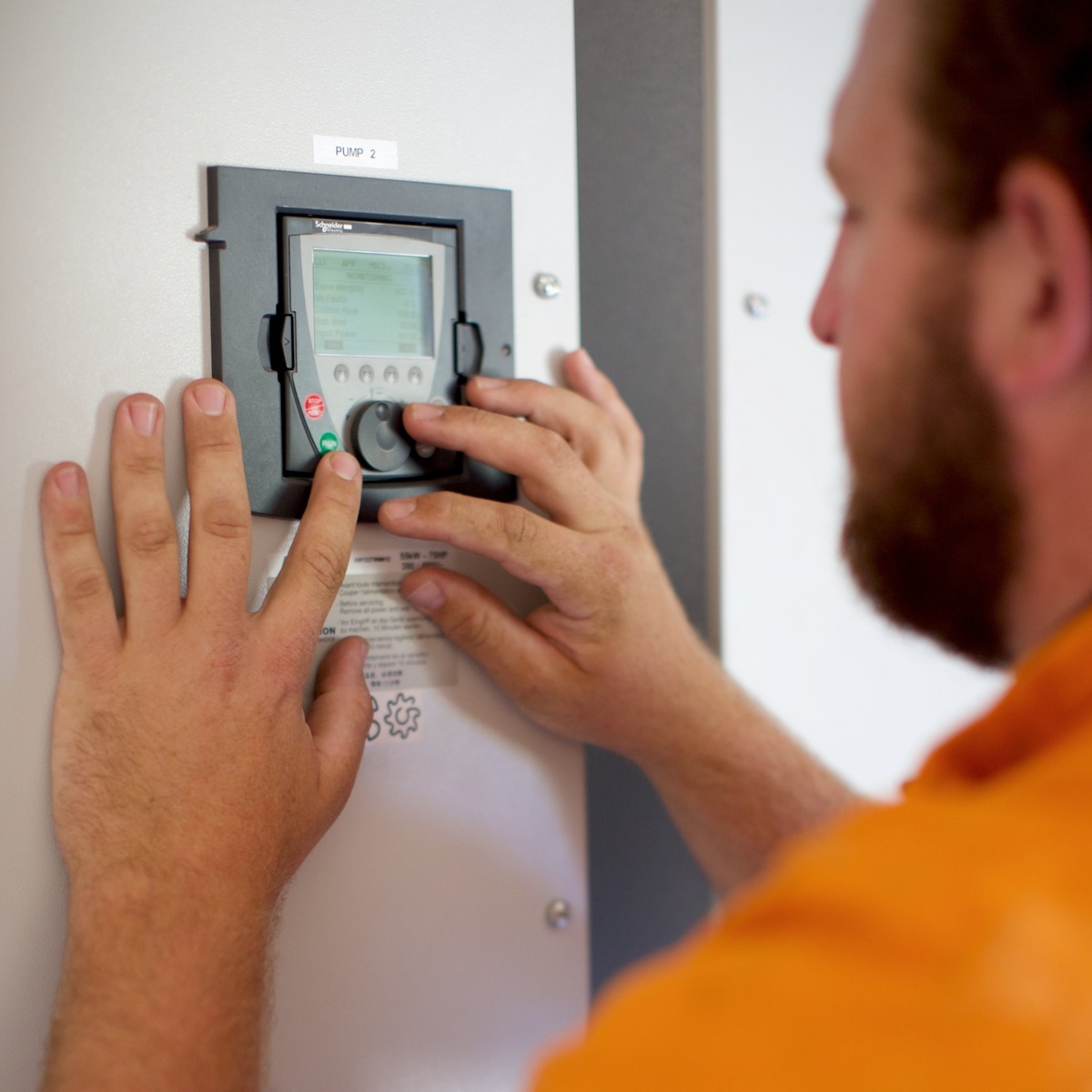
If you operate a centre pivot, linear, hard hose irrigator, drip system or other irrigation setup, book servicing early and start the system well before irrigation is actually required.
Run it properly. Don’t just switch it on for five minutes and assume everything is fine.
Check:
- Pumps and operating pressures
- Electrical and control systems
- Gearboxes, drives and moving components
- Sprinklers and nozzles
- Filters
- Valves
- Leaks
- End guns and pressure regulators where fitted
- Application performance across the irrigated area
WaterForce provides ongoing maintenance and servicing for irrigation systems around New Zealand, including Valley centre pivots and linears.
Starting early gives you time to deal with worn parts, blocked sprinklers or pump issues without the pressure of an immediate crop or pasture requirement.
Irrigation uniformity matters even more when water is limited
One area that’s easy to overlook is application uniformity.
If part of a paddock is receiving too much water and another area too little, you’re not getting full value from the water, electricity and pumping hours being used.
That becomes even more important if water restrictions or allocation limits come into play.
Checking sprinkler condition, pressure and overall irrigation performance before summer can help make sure the water available is actually reaching the ground where it’s needed. WaterForce also supports irrigation performance and uniformity testing as part of its agricultural irrigation services.
Have the critical spare parts sorted
Dry summers put water infrastructure under pressure, and breakdowns never seem to happen at a convenient time.
It’s worth looking at the parts of your system that would stop the operation if they failed. Depending on the property, that could include a pump, trough valve, irrigation sprinkler, solenoid, fitting or section of pipe.
You don’t need to keep an entire irrigation shop in the shed, but having common consumables and knowing where to get the rest can save valuable time.
WaterForcebranches carry significant local stocks of pipe, fittings, valves,sprinklers, pumps, filtration equipment and irrigation components, backedby technical and service teams throughout the country.
Plan now, then keep reviewing the situation
El Niño doesn’t mean every part of New Zealand will have a dry summer.
Conditions can vary considerably between regions, and forecasts will continue to change as spring progresses. DairyNZ recommends reviewing forecasts regularly and planning for a range of scenarios rather than locking into one outcome too early.
For your water system, though, the preparation is useful either way.
Fixing leaks, checking pumps, improving storage, monitoring consumption and servicing irrigation equipment are worthwhile jobs regardless of how much rain eventually falls.
And if it does turn dry, you’ll be glad they were done before summer.
Need help getting your water system summer-ready?
Water is critical to homes, farms, orchards and businesses, and our teams understand how quickly a water problem can become an urgent one.
Your local WaterForce branch can help with water system advice, irrigation servicing, pumps, stockwater, storage, filtration, monitoring, spare parts and technical support.
We also provide 24/7 breakdown and callout support when something can’t wait until Monday morning.
Get prepared now. Contact your local WaterForce team and make sure your water system is ready for the summer ahead.
.jpg)