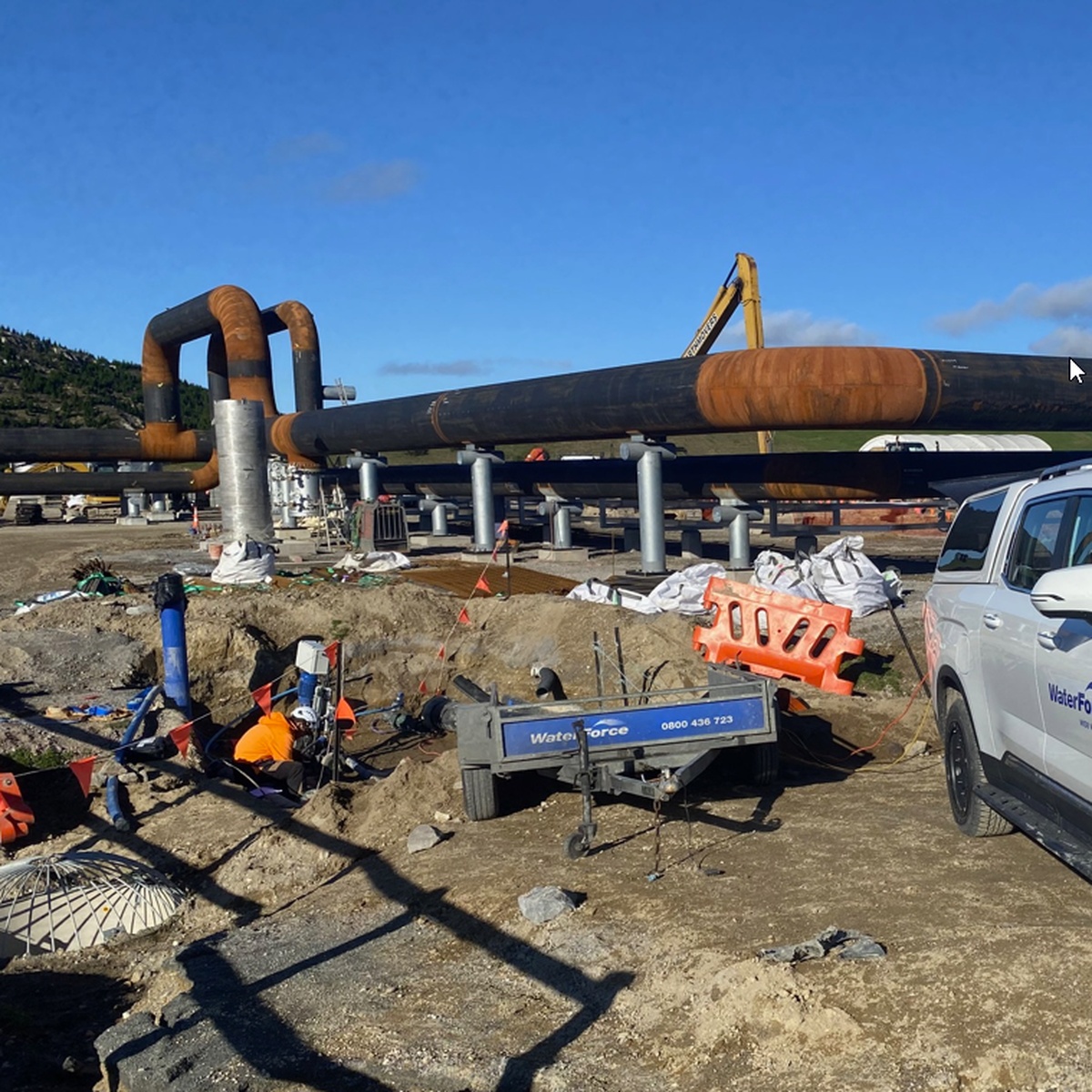
WaterForce has been supporting Hicks Bros at the Te Mihi 2A geothermal steam field near Taupō, carrying out specialist PE pipeline pressure testing on newly installed pipework.
The work involves hydrostatic testing of PE pipelines from 160mm through to 400mm diameter, giving the project team documented confirmation that completed pipeline sections meet the required test criteria before commissioning.
What does PE pipeline pressure testing involve?
PE pipeline pressure testing confirms that newly installed polyethylene pipework can safely hold its specified operating pressure before it is put into service. At Te Mihi 2A, WaterForce is using the constant pressure water-loss method, carefully controlling pressure, measuring make-up water and documenting the results against the project’s required acceptance criteria.
It sounds simple enough on paper. Fill the pipe, pressurise it and see whether it holds.
In practice, large-diameter polyethylene behaves differently from rigid pipe materials, and getting a reliable result takes careful preparation and an understanding of how PE responds under sustained pressure.
At Te Mihi 2A, each test section is filled with water and thoroughly purged of air before being brought up to the specified 20 bar Standard Test Pressure (STP).
The pipeline is then left to stabilise overnight. The formal test is carried out the following day, with the specified pressure maintained while the volume of make-up water required is accurately measured and recorded.
Those results are then assessed against the AS/NZS acceptance criteria required by the project, providing a clear record that the completed section has met the testing specification.
Testing PE pipelines from 160mm to 400mm
The pipelines we’ve been testing on site range from 160mm to 400mm diameter.
At that scale, there’s a fair amount of water involved, and the behaviour of the pipe itself becomes an important part of the test.
Polyethylene expands slightly as pressure is applied. That means a pressure drop doesn’t automatically indicate a leak. Technicians need to understand the expected response of the pipe, maintain stable test conditions and accurately measure the amount of water required to hold the target pressure.
A good test depends on getting the basics right:
- Thoroughly filling the pipeline
- Removing entrapped air
- Bringing the pipe up to the required test pressure in a controlled way
- Allowing enough time for the PE pipe to stabilise
- Maintaining consistent test conditions
- Accurately measuring make-up water
- Recording the test data and results
- Checking the completed test against the project acceptance criteria
It’s detailed work. Rushing the preparation can make it harder to get a clean, reliable result later.
Keeping construction moving at Te Mihi 2A
Pressure testing is only one part of a much larger construction programme, so timing matters.
Rather than waiting until all of the pipeline installation is complete, we’ve been testing finished sections while work continues elsewhere on site.
That allows completed pipework to be progressively checked and signed off, helping Hicks Bros maintain momentum across the project rather than creating a testing bottleneck near the end of construction.
For us, that’s a big part of providing a useful service on major infrastructure jobs. The technical result matters, but so does fitting the work around the wider construction programme.
A quieter way to power the test equipment
There’s also been a slightly different approach to powering our pressure testing setup on this job.
Instead of running a diesel generator throughout the day, we’ve been using the export power available from our hybrid and electric utes to operate the test pump.
It’s a simple change, but one that makes a noticeable difference on site.
The setup provides:
- Less generator noise
- Reduced diesel use
- Lower emissions during testing
- Fewer pieces of equipment to manage on site
Most importantly, it still gives us the reliable power needed to carry out the pressure tests properly.
It’s been a practical way to use the capability already built into the vehicles rather than bringing another engine onto site simply to run a pump.
Experience matters when pressure testing PE pipelines
Reliable hydrostatic pressure testing takes more than a pump and a pressure gauge.
The technician needs to understand how polyethylene behaves, recognise the effect of trapped air, monitor changing test conditions and know whether the results being recorded make sense.
That experience becomes particularly important when working with larger pipelines and higher test pressures.
On a project like Te Mihi 2A, it also means working closely with the installation team, coordinating testing around other site activity and producing the documentation needed to keep each completed section progressing towards commissioning.
Supporting New Zealand infrastructure projects
We’ve appreciated the opportunity to work alongside Hicks Bros on Te Mihi 2A and contribute our pressure testing capability to a significant geothermal development near Taupō.
For WaterForce, projects like this are a good example of where our water engineering experience extends beyond traditional irrigation and pumping work.
Whether it’s a rural water system, irrigation network or major infrastructure pipeline, the same fundamentals apply: get the installation right, test it properly and make sure there’s good information behind the result.
Need PE pipeline pressure testing for your next project?
WaterForce can support contractors and project teams with PE pipeline pressure testing, test documentation and pipeline commissioning support across New Zealand.
If you’ve got newly installed polyethylene pipework that needs to be tested before commissioning, contact the WaterForce team to discuss the pipeline size, test requirements and project programme.