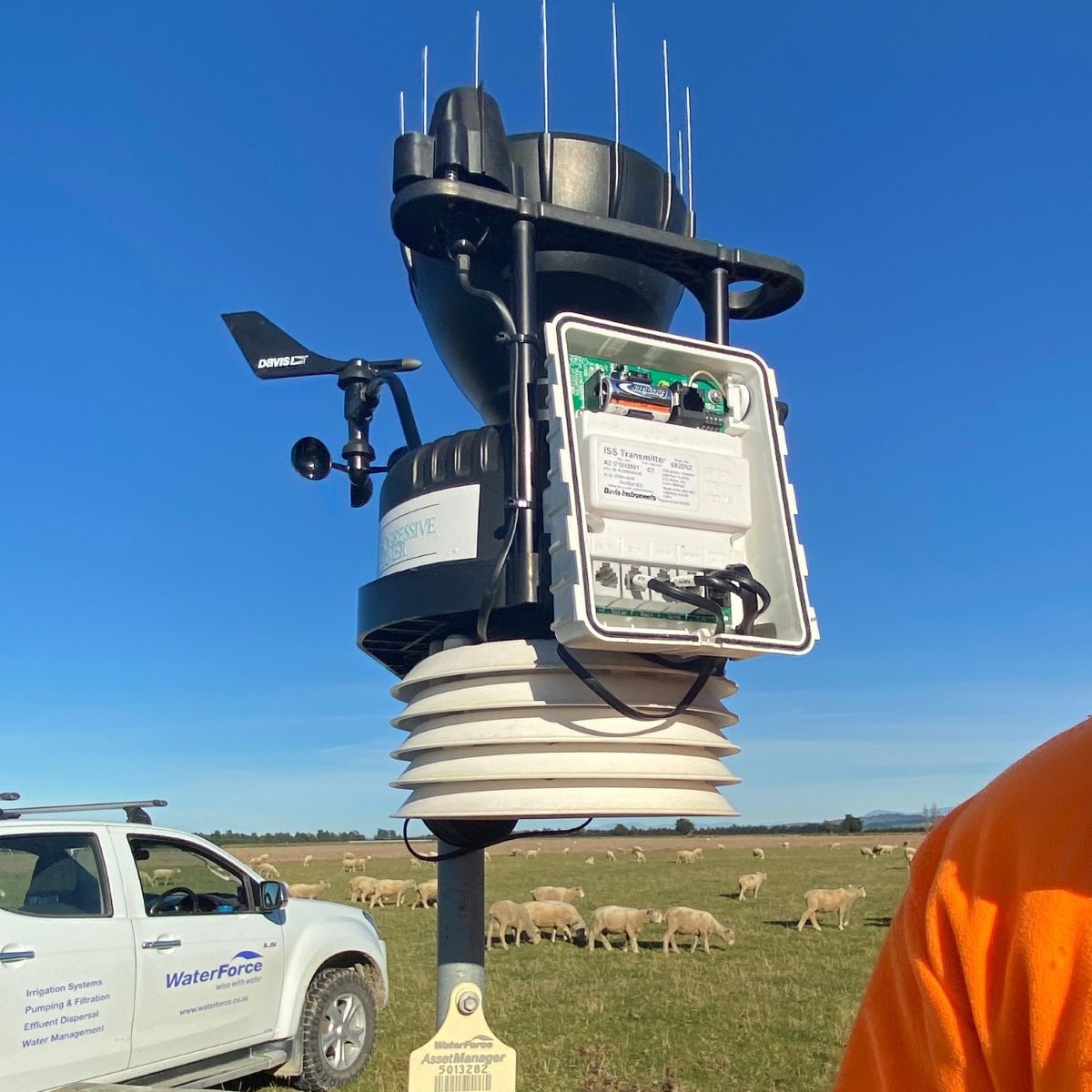
Pots and hanging baskets look great around the home, but they’re also some of the first plants to suffer when watering gets missed. A warm nor’westerly day, a weekend away, or even one busy week can be enough to dry them out.
That’s where a simple home irrigation setup can make a big difference. With a Hunter Hydrawise WiFi irrigation controller, you can automate regular watering, adjust settings from your phone, and keep your pots and basket sticking along without dragging a hose around every evening.
For many homeowners, this is also a tidy DIY project. You don’t need a large lawn irrigation system or a full garden redesign. With the right components and a bit of planning, you can build a reliable watering system for pots, hanging baskets, planters, courtyards, decks, and garden edges.
Can Hunter WiFi irrigation controllers water pots and hanging baskets?
Yes. Hunter Hydrawise WiFi irrigation controllers are a great option for watering pots and hanging baskets because they let you schedule short, regular watering cycles and adjust them through an app. When paired with the right valve, filter, pressure reducer, pipework, and emitters, they make small-scale home irrigation simple and reliable.
Hunter’s Hydrawise system allows irrigation to be managed from a smart phone or web browser, and it can use local weather data to fine-tune watering through weather-based adjustments. Hydrawise controllers are designed to work with Hydrawise software, giving homeowners remote control over their irrigation system.
Why pots and hanging baskets need a different watering approach
Pots and hanging baskets dry out faster than garden beds. There’s less soil volume, more exposure to sun and wind, and limited room for roots to chase moisture.
Hanging baskets are especially unforgiving. They can look fine in the morning and be drooping by late afternoon, particularly through summer.
A good irrigation setup helps by delivering water:
· Often enough to keep the root zone moist
· Slowly enough that water soaks in rather than running straight out
· Evenly enough that every pot gets its share
· Automatically enough that watering doesn’t depend on someone being home
The trick is not just “putting water on”. It’s designing the system so the pressure, flow, filtration, and emitters all suit the job.
What you need for a reliable pot and basket irrigation system
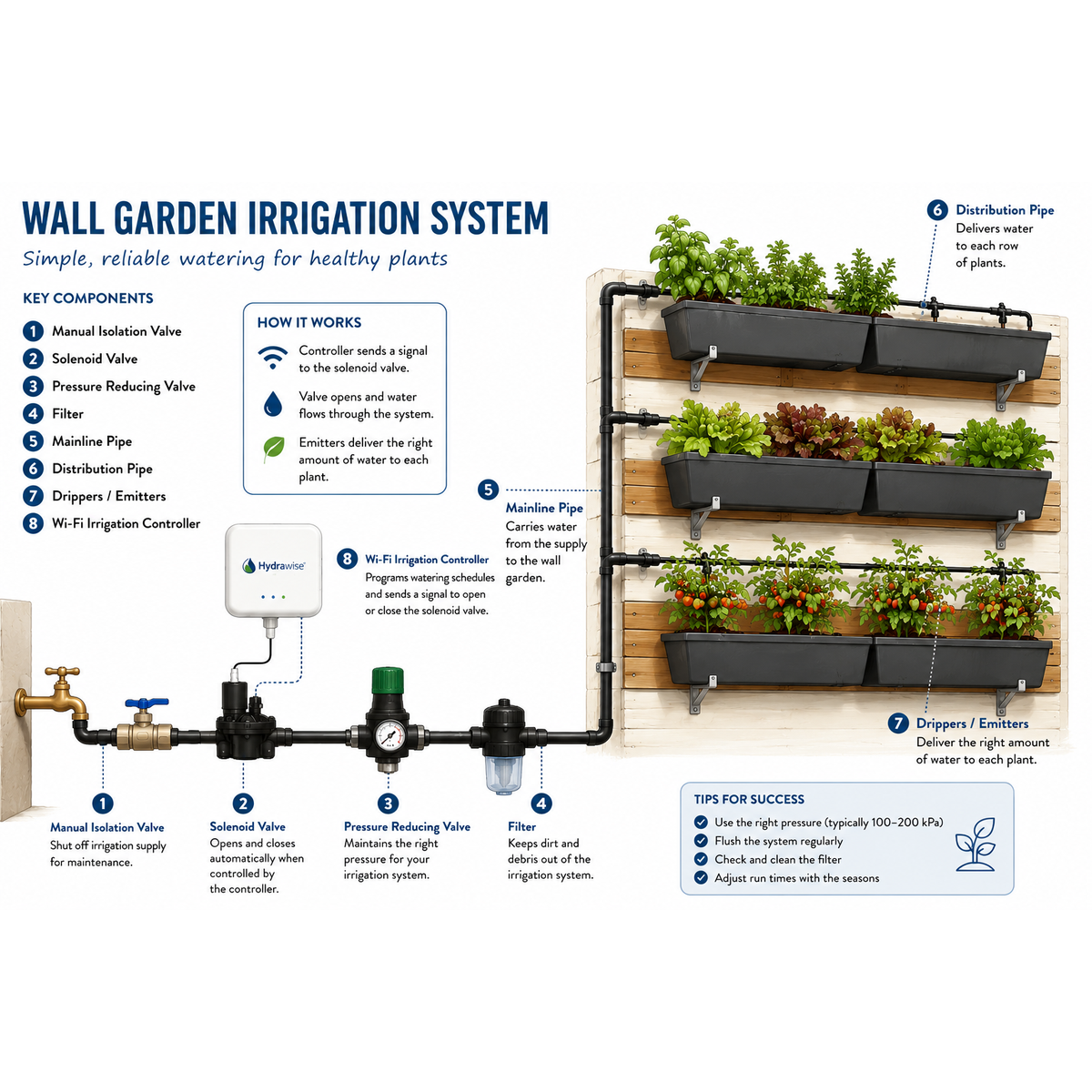
A good home irrigation setup for pots and hanging baskets is made up of several simple parts. Each one matters.
1. Hunter Hydrawise WiFi irrigation controller
The controller is the brain of the system.
We often recommend Hunter Hydrawise controllers for this type of application because they’re easy to manage and well suited to home irrigation. You can set watering times, adjust schedules, and manage the system from your phone.
The nice part is the seasonal flexibility. Hydrawise can take the time of year, season, and local weather conditions into account, then adjust watering to better suit what’s happening outside. Hunter describes its Predictive Watering as a way of using local weather data to water only when needed.
That’s handy for pots. In January, they might need regular watering. In cooler or wetter months, they don’t need the same volume.
2. Manual isolation valve
A manual isolation valve is a simple but important part of the setup.
It lets you shut off the irrigation line when you need to service the system, clean the filter, replace a fitting, or make changes. Without one, even small maintenance jobs can turn into a nuisance.
Use a quality valve. Cheap fittings are rarely cheap once they start leaking behind a planter box or under a deck.
3. Solenoid valve suited to your water pressure
The solenoid valve opens and closes the water supply when the controller tells it to.
It needs to be selected for your water supply pressure and system design. Town supply, rainwater tanks, and pumped systems can all behave differently, so this is one area where the right advice saves hassle.
A correctly matched solenoid helps the system turn on and off cleanly and reduces the risk of poor performance or water hammer.
4. Pressure reducing valve
Small irrigation pipe and pot emitters don’t usually need high pressure. In fact, too much pressure can cause fittings to pop, emitters to over-deliver, or water to spray where it shouldn’t.
A pressure reducing valve keeps pressure at the right level through the pipework feeding your pots and baskets.
This is especially important when connecting to a strong mains supply or a pumped water system.
5. Quality filter
Tiny emitters and drippers can block if dirt, grit, or organic matter gets through the line.
A filter helps protect the system and keeps water flowing evenly. This matters even more if you’re using tank water, bore water, or any supply where sediment may be present.
For most small home systems, filter maintenance is straightforward. Check it, clean it, and keep it accessible.
6. Pipe, fittings, and brackets
Pipework needs to be neat, secure, and protected where possible.
For pots and baskets, this often means running small irrigation pipe along fences, walls, pergolas, deck edges, garden beds, or behind planter boxes. Brackets and clips help keep everything tidy and stop pipework from moving around or getting damaged.
The best setups are the ones you hardly notice.
7. Emitters matched to the job
Emitters are where the water comes out. They need to suit the pot size, plant type, and system flow rate.
A small herb pot may only need a low-flow dripper. A large planter with thirsty annuals may need more than one emitter. A hanging basket may need careful placement so the water lands in the growing mix, not down the chain or over the side.
This is where a bit of design thinking helps. You want every plant watered properly without overloading the system.
A simple DIY design process
For many homeowners, this is a neat DIY job. The key is to plan before cutting pipe.
Start with these steps:
- Count your pots and baskets: Note their size, location, and how thirsty the plants are.
- Group similar areas together: Sunny deck pots may need different watering from shaded entry planters.
- Check your water source: Is it town supply, tank water, a pump, or an existing garden tap?
- Work out the best pipe route: Keep pipe runs tidy, short where possible, and protected from foot traffic.
- Choose emitters carefully: Match emitter flow to plant needs and available system flow.
- Allow for maintenance: Keep the isolation valve, filter, and key fittings easy to reach.
- Test before walking away: Run the system manually and check every emitter before relying on automation.
A good rule of thumb: if one pot is always dry or one basket is always overflowing, don’t just change the controller time. Check the emitter size, placement, and pressure first.
Why WiFi control makes this easier
The big advantage of a WiFi irrigation controller is that you’re not stuck walking out to a timer box every time the weather changes.
With Hydrawise, you can view and manage your controller through a mobile device or web browser. That makes it much easier to adjust watering when you’re away, when the season changes, or when you’ve added new pots.
For example, you might:
· Increase watering during a hot, dry week
· Pause or reduce watering after rain
· Add an extra short cycle for hanging baskets
· Run the system manually after planting new pots
· Check settings before heading away for a few days
That last point is a big one. Being able to leave home knowing your pots are still being watered takes a lot of stress out of holidays, long weekends, and busy periods.
When to ask WaterForce for help
Some homeowners enjoy doing most of this themselves. Others would rather have the whole system installed. A lot sit somewhere in the middle.
WaterForce can help you choose the right components so the system is robust from the start. That includes the controller, isolation valve, solenoid, pressure reducing valve, filter, fittings, pipework, and emitters.
We can also help with the parts that are trickier to get right, such as connecting to the water supply, setting up the controller, installing the solenoid, or designing the flow rate so everything works properly.
Then, if you want, you can take care of the more straightforward pipe work and emitter installation yourself.
For home irrigation advice, visit our home irrigation systems page.
https://www.waterforce.co.nz/water-for-home/home-irrigation
Keep your pots watered without making it a daily job
Pots and hanging baskets don’t need a complicated irrigation system. They need a reliable one.
With a Hunter Hydrawise WiFi controller and the right supporting components, you can build a simple home irrigation setup that waters regularly, adjusts with the season, and gives your plants a much better chance through dry spells.
Whether you want a full installation or just some help choosing the right gear, WaterForce can help you get it sorted properly.
Call WaterForce today for help with your home irrigation system, so you can head away for a few days and know your pots and hanging baskets are still getting watered.
.jpg)