Reliable frost protection depends on having enough water, consistent coverage and a system that is tested and ready before conditions turn. WaterForce designs, installs and pre-season-tests water-based frost protection for commercial orchards and vineyards: source, storage, pumping, coverage, controls and the operating plan, engineered as one system with a defined protection boundary. No frost-protection method can guarantee zero damage. What good engineering can do is make sure the system delivers its designed protection when the temperature drops.

Source, storage, refill and pumping designed for full-length frost events, not summer irrigation duty.
Commissioning and field testing confirm pressure and distribution before the first frost, not during it.
Monitoring, thresholds and alarm escalation designed around a frost-response plan your team agrees before the season.
Pre-season servicing and season-critical support through WaterForce branches across New Zealand.
Water releases latent heat as it freezes. A correctly designed system applying water continuously and evenly can hold protected plant surfaces close to freezing point while ice forms. The physics also cuts the other way: uneven application, a late start, an early stop or a supply failure can reduce protection or make damage worse. That's why the design, capacity and operating plan carry as much weight as the sprinklers.
.avif)
Frost protection demands higher, more continuous flow than normal irrigation, so normal summer performance does not confirm that a system can sustain a long frost event. WaterForce designs from the protected area, required application rate, event duration, pumping head, pipeline losses and the source or storage's ability to sustain and refill, with power and pump reliability treated as critical design inputs.
.avif)
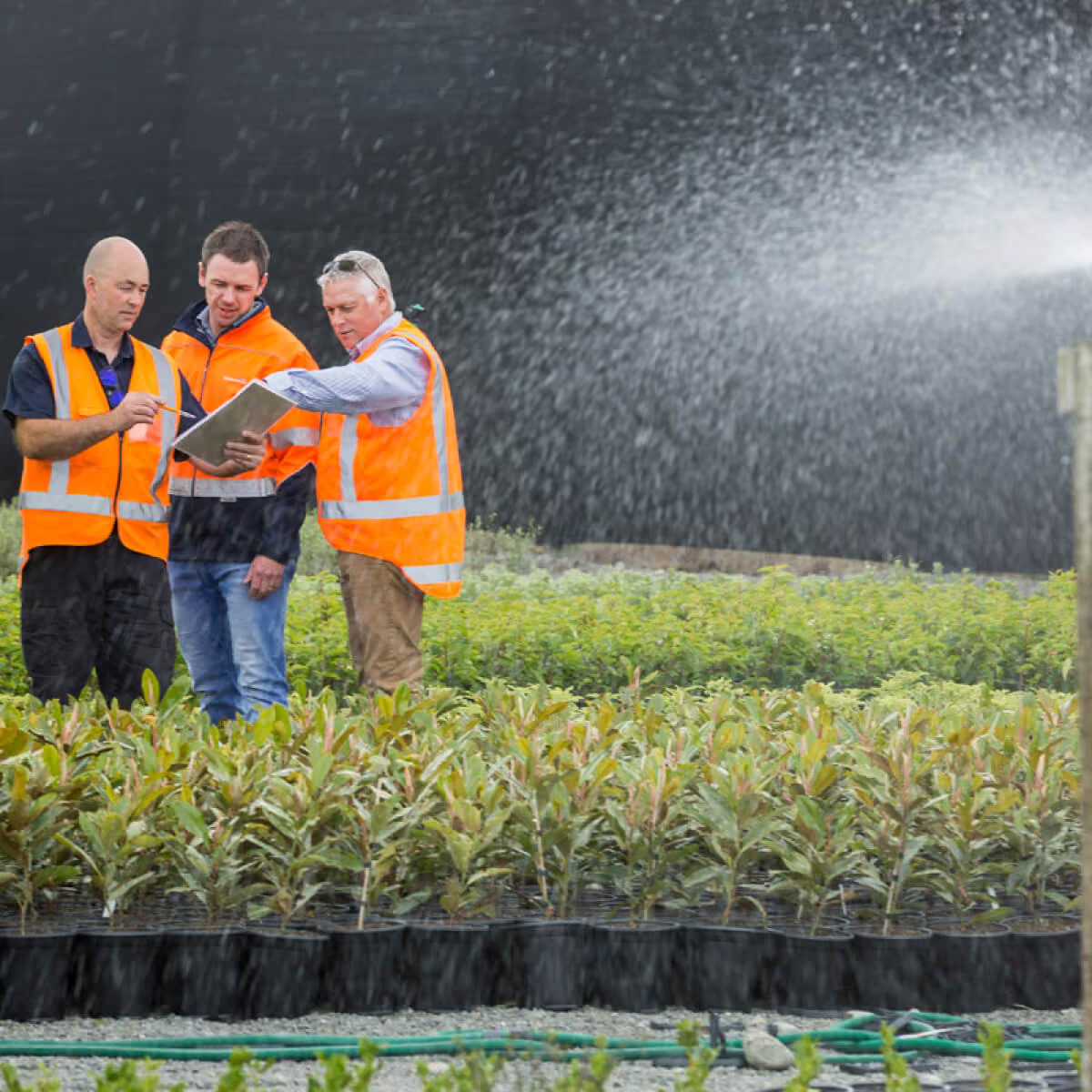
Sprinkler type, spacing, nozzle, pressure and layout set the application across the crop's geometry, and field testing confirms it before the season. Monitoring supports start and stop decisions, controls and alarms confirm pumps, pressure and zones are running, and the response plan covers what the operator does if power, communications or a pump fails mid-event. Automation helps, while an agreed plan gives the operator a clear response when conditions change.

Before frost risk rises, the whole system gets checked and run: source, storage, pumps, valves, filters, pipelines, sprinklers, sensors, alarms and power, long enough to confirm flow, pressure and coverage by zone. Finding faults early leaves time to repair equipment, order parts and test the system again before it is needed.

Applied water releases heat as it freezes, holding protected tissue near freezing point under suitable conditions, provided application stays continuous and even for the full event.
Common applications include kiwifruit and other orchards, along with vineyards in frost-prone growing regions such as the Bay of Plenty and Central Otago. Suitability still depends on the crop, growth stage, block, frost type, water capacity and drainage, so feasibility is assessed site by site.
Protected area times application rate times event duration, checked against source, storage and pumping capacity. We calculate it for the site because the required capacity is often materially higher than normal irrigation demand.
Sometimes it can contribute, but normal irrigation duty doesn't prove frost capacity or coverage. We assess and test the system against a full event before you rely on it.
Per crop-specific guidance, measured conditions and the system design. The operating protocol is agreed with you before the season, not improvised on the night.
No. Conditions and system limits vary. The design states the conditions it's engineered to address, and the operating plan is built around them.
That scenario is designed for: backup arrangements where feasible, alarms so the operator knows immediately, and a response plan agreed in advance.
A full system run and inspection: pumps, valves, filters, lines, sprinklers, sensors, alarms and power, with coverage confirmed by zone and faults fixed while parts are still obtainable.
Commonly coverage gaps, pressure variation, a late start or capacity running out mid-event. A coverage test and event review usually find the cause quickly.
Well before budbreak. Allow time for design, installation and testing before the frost-risk period.
Talk to WaterForce about a frost-protection assessment or a pre-season check of the system you've got. Your local team is only a call away.