Fertigation Systems for Horticulture & Viticulture

Fertigation systems designed for reliable delivery across every block

Across horticultural blocks and vineyards, an accurate dosing pump doesn't guarantee the nutrient reaches every emitter evenly. Real block flows, mixing, filtration, injection point, line travel and flushing all affect delivery. WaterForce designs, installs and commissions fertigation as part of the complete irrigation network, turning your agronomist's nutrient programme into a repeatable, visible process. Crop nutrition stays with your agronomist. Making sure the system actually delivers it is our job.
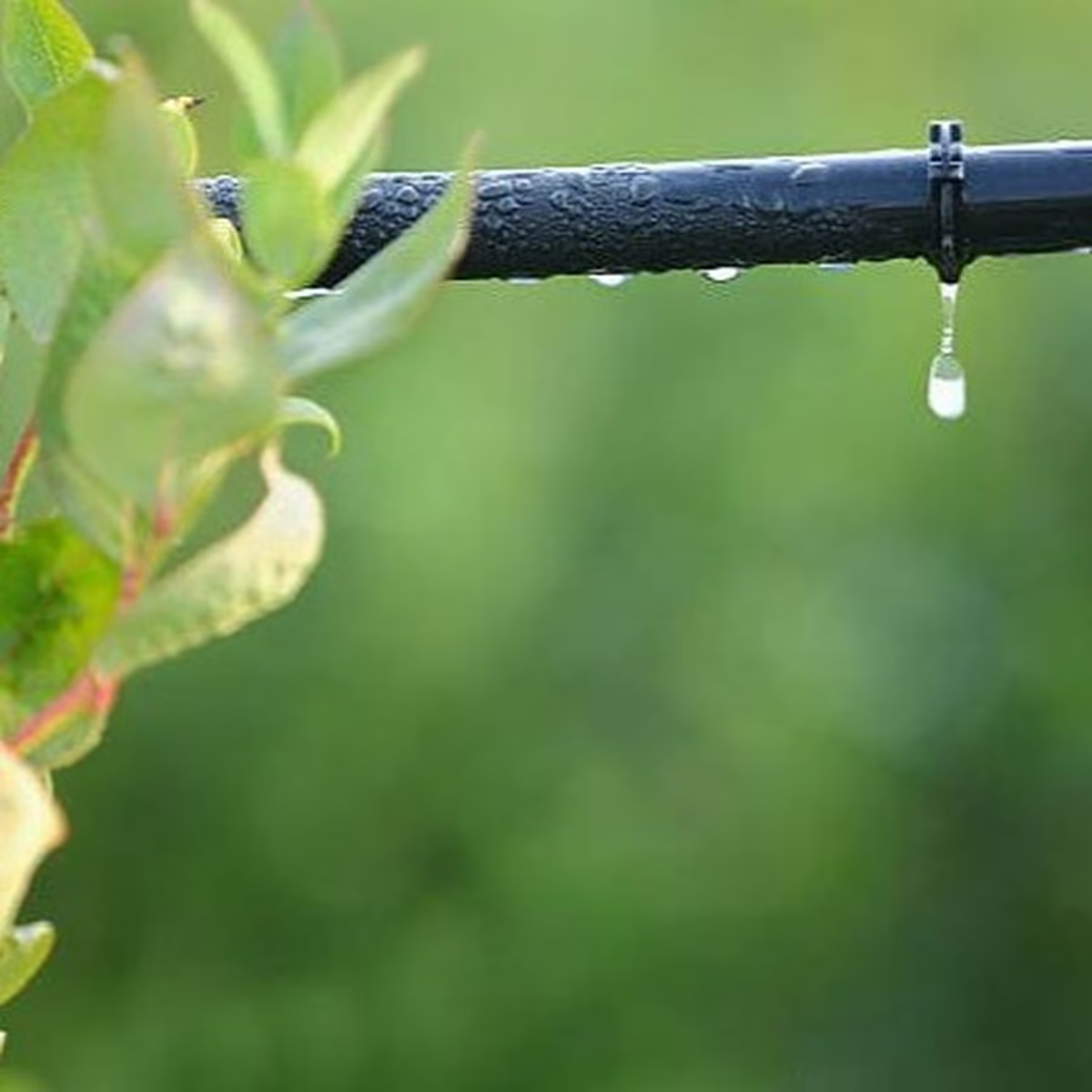
Water droplet forming on irrigation dripline

Why WaterForce for fertigation

Designed for real flows

Injection, mixing and filtration engineered around measured zone flows and pressures, not nameplate figures.

Uniformity before dosing

The irrigation network is checked for even application first, because uneven water means uneven nutrient.

Backflow protection built in

Approved protection selected for the hazard, designed into the system from the start.

Commissioned and handed over

Calibrated against measured operation, with operators trained on recipes, flushing and records.

How a fertigation system fits together

A complete system begins with fertiliser preparation and mixing, storage or day tanks suited to the product, and the dosing or injection method. Flow and pressure control, filtration and measurement protect the downstream equipment and confirm operating conditions. Distribution through the drip or micro zones, followed by flushing, calibration and maintenance, keeps delivery consistent. Coordinating those stages helps the nutrient programme reach the block consistently while reducing avoidable filter and emitter problems.

Irrigation sprinkler operating beneath an apple tree

Injection and mixing matched to the process

Hydraulic dosing pumps, electrically driven pumps, venturi injection or automated mixing and control: the right method follows the required accuracy and range, flow variation, available pressure and power, product characteristics and the automation you actually want to run. Materials are matched to the substances handled, and equipment selection follows the process rather than the catalogue.

Monitoring, calibration and flushing

Flow, volume, EC and pH readings are useful, but no single number proves uniform delivery at every emitter. Commissioning confirms settings against measured operation, and routine calibration plus records catch drift early. On the maintenance side, correct mixing, filtration and line flushing prevent the precipitates that block filters and emitters, and we design the access to make those jobs easy.

Frequently asked questions

What is fertigation?

The controlled application of compatible water-soluble nutrients through an irrigation system, typically drip or micro-irrigation.

Which crops use fertigation?

It's standard across commercial horticulture and viticulture. Suitability depends on the crop, irrigation method and system uniformity, which we verify as part of the design.

Can fertigation be added to my existing irrigation system?

Usually, but a retrofit is more than inserting an injector. We check flow and pressure variation, uniformity, filtration, flushing, materials and backflow protection first, so the dose arrives where it should.

How is the dosing rate controlled?

Depending on the equipment: by flow, time, volume, EC or pH targets, or programmed recipes, all calibrated against measured operation at commissioning.

Why are filtration and flushing so important?

They protect valves and emitters from particles and precipitates and clear residue from the network. They're what keep a fertigation system delivering season after season.

Does fertigation need backflow protection?

Yes. Injecting fertiliser into irrigation creates exactly the hazard backflow protection exists for. Approved protection is part of every WaterForce fertigation design.

Does WaterForce provide fertiliser recommendations?

No, nutrition stays with your agronomist. We build and commission the system that delivers their programme accurately.

Can dosing be automated across zones?

Yes, where the controls, communications and hydraulics support it. We design automation around your zones and recipes, at the level your team will actually use.

My EC readings look right but the crop response is patchy. Why?

Often distribution: pressure variation, emitter condition, injection timing versus zone travel time, or flushing gaps. A system check can help identify where distribution is falling short.

What do I need to start a fertigation project?

Crop and block plan, irrigation zones, measured flows and pressures, water analysis, the nutrient programme, products used and any existing dosing equipment. Your local team takes it from there.

Deliver the programme, block after block

WaterForce has supported New Zealand growers for more than twenty years. Talk to your local team about a new fertigation system, a retrofit or one that isn't delivering what the recipe says.