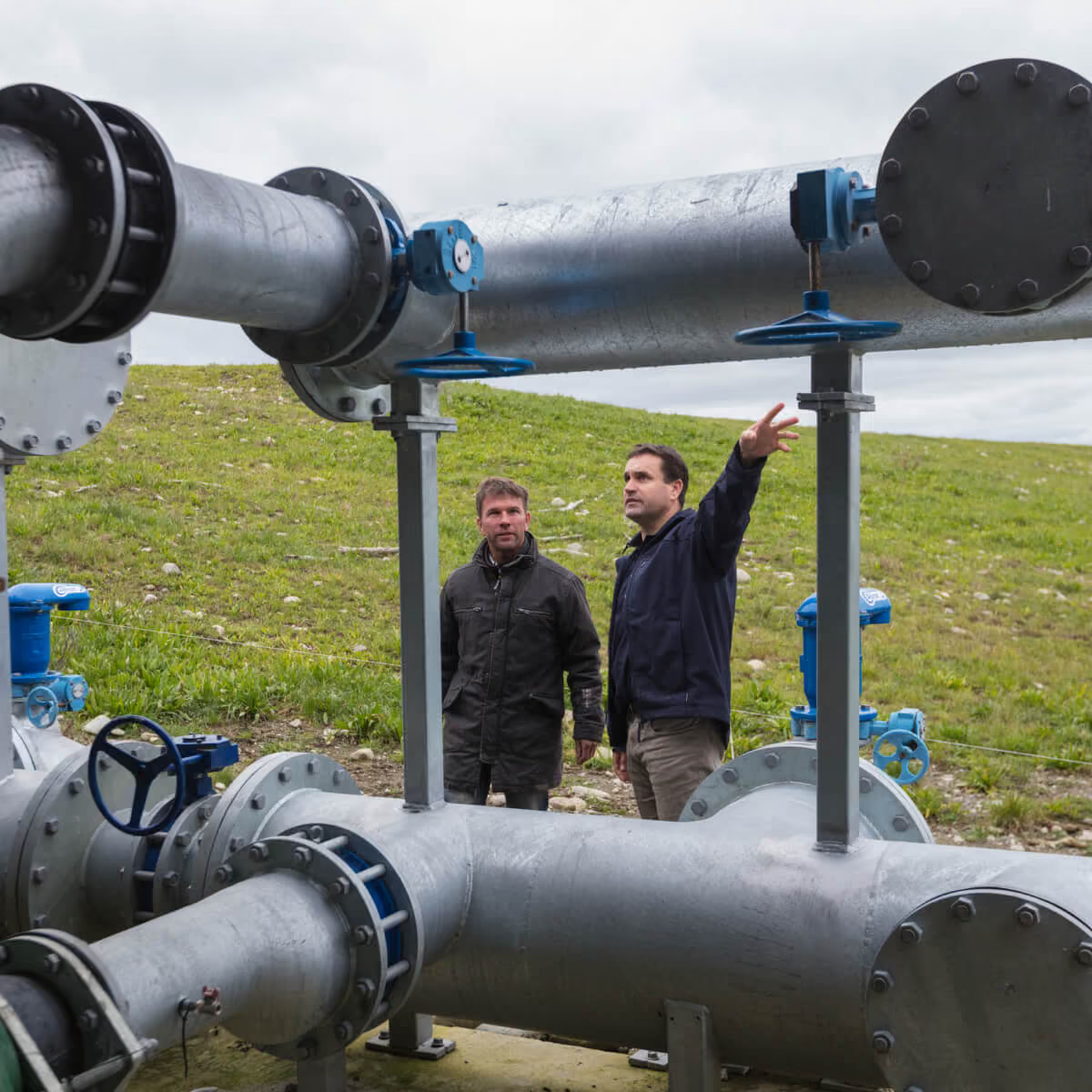
Storage constraints, recurring blockages, stopped equipment and too many manual moves make effluent harder to manage than it needs to be. WaterForce designs, upgrades and services effluent systems as one connected pathway, collection, solids, storage, pumping, application and controls, built around the farm and the people running it. The aim is a system your team can operate and maintain, with a clear response when equipment faults.
.avif)
Collection, solids, storage, pumping, application and controls assessed and designed together.
Systems your team can run, monitor and fault-find without second-guessing.
Storage and application designed around the farm's consent and deferral requirements from day one.
Whole-of-life support: parts, repairs and planned maintenance through WaterForce branches across New Zealand.
System performance is decided by how each stage works with the next: effluent and washdown are collected, solids and debris are managed to protect downstream equipment, storage provides capacity when irrigation should be deferred, pumping moves effluent reliably at the required rate, and land application matches the soil, area and consent conditions. Controls and monitoring tie it together so the operator can see what's happening and respond early. If a stage is overlooked in the design, it can show up later as a blockage, an overflow risk or a compliance issue.
Usable storage depends on herd size, washdown volumes, rainfall, soil drainage and the deferral your consent requires, not the nominal pond size. Application design works from soil type, available area, application depth and rate, and the equipment doing the work. WaterForce designs both ends against the farm's real numbers so deferral is genuinely possible and application stays within conditions.
Most effluent frustrations trace to a mismatch somewhere in the pathway: solids reaching equipment that can't handle them, storage that fills faster than expected, pumps working against the wrong duty, or application gear that needs too many moves. We assess the full pathway, identify the constraint and recommend the level of upgrade actually required.

It comes from herd size, washdown, rainfall, soils and your consent's deferral requirements. We calculate usable storage for the farm rather than quoting a generic pond size.
Yes. We assess the complete pathway, find the constraint and recommend the level of change actually required, staged where that helps cashflow.
Usually solids management upstream of the blockage point: screening, stone traps or agitation not matched to the equipment downstream. Fixing that beats endlessly clearing lines.
Whatever your soils, conditions and consent allow. The system is designed so those limits are practical to achieve, and monitoring shows you're within them.
Yes, from pump control and fail-safes through to monitoring and alerts. The right level depends on the system and the operator, and we design for both.
Yes. Storage, deferral capability, application rates and record keeping are designed around the consent from the start. Conditions differ by region, so the design is farm-specific.
A well-designed system gives the operator a clear response: alarms, fail-safes and a known isolation and restart process. That response plan is part of our handover.
Yes. Bring the equipment details and fault history and the local team will assess it as part of the wider pathway.
Routine checks on screens and solids handling, pump servicing, line flushing, nozzle and applicator inspection, and control and alarm testing, scheduled around the season.
Describe the current system, herd size, the recurring problems and your consent conditions, with photos if you have them. Your local team will assess from there.
WaterForce has worked alongside farmers up and down the country for more than twenty years. Talk to your local team about a new effluent system or a practical upgrade to the one you already operate.