Polyethylene pipe has become a familiar sight across New Zealand’s water infrastructure. It’s used for farm water, irrigation, municipal supply, industrial water, wastewater and civil construction projects.
A big part of its success comes down to how the pipe is joined.
Electrofusion, commonly shortened to EF, gives installers a practical way to create strong, permanent joints in PE pipelines. When the pipe is prepared properly and the correct welding process is followed, an EF joint becomes an integrated part of the pipe system rather than a separate mechanical connection.
That makes EF fittings a valuable option wherever long-term pipeline reliability matters.
What are electrofusion fittings for PE pipe?
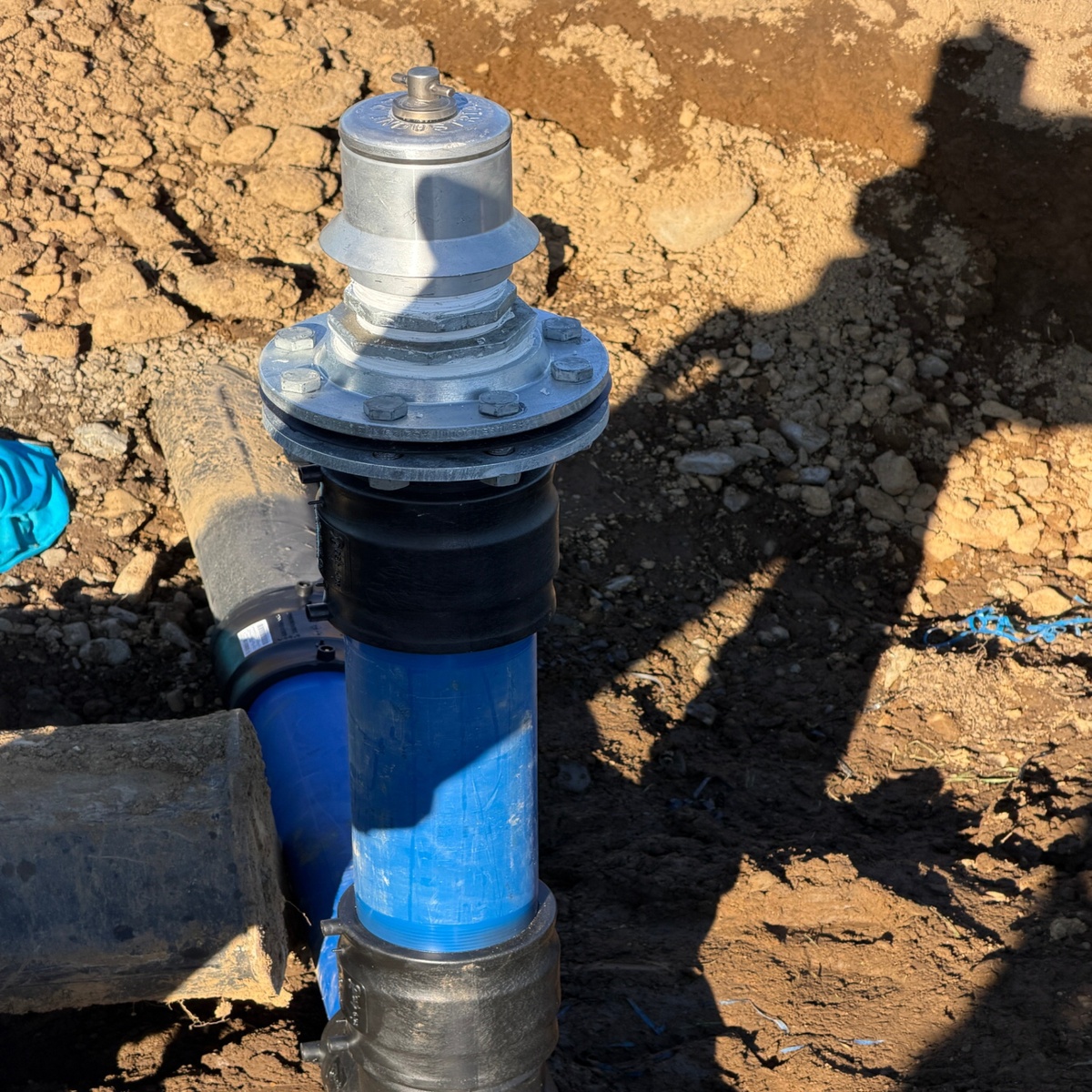
Electrofusion fittings are PE fittings with built-in electrical heating elements. A controlled welding unit energises these elements, heating the fitting and prepared pipe surfaces until they fuse together. Once cooled, the fitting and pipe form a permanent, pressure-capable joint suitable for water, wastewater, irrigation and other PE pipeline applications.
EF fittings can be used to connect straight pipe, change direction, create branches, reduce pipe size, make repairs or connect valves and other equipment.
They’re available in a wide range of configurations, including:
- Couplers
- Elbows
- Tees
- Reducers
- End caps
- Tapping saddles
- Branch saddles
- Transition fittings
- Repair fittings
Electrofusion has been used internationally since the 1970s, and millions of EF joints are now installed around the world each year. Industry guidance describes it as a safe, efficient and economical method for joining underground and above-ground PE pressure systems.
Why is the water industry adopting EF fittings?
Water infrastructure needs to operate under pressure, often while buried, exposed to changing ground conditions or installed in locations that are difficult to access later.
A small leak can become a major issue. It can interrupt water supply, damage surrounding infrastructure, waste treated water or require expensive excavation and reinstatement.
EF fittings help reduce those risks by creating a fused connection without bolts, threads, rubber rings or mechanical gripping components. There are fewer separate parts within the joint that can loosen, corrode or move over time.
The method is also highly versatile. EF fittings are used across potable water, raw water, pressure wastewater, vacuum sewer and general water distribution applications. International standards specifically cover PE fittings for buried and above-ground pressure systems in these areas.
They areparticularly useful for:
- Watermain construction
- Wastewater pressure pipelines
- Pumping stations
- Irrigation mains
- Farm and stock water systems
- Industrial water distribution
- Pipeline repairs
- Confined sites where butt-fusion equipment is difficult to position
- Connections into existing PE pipe networks
This flexibility gives contractors, councils and asset owners a consistent joining method across a wide range of pipe sizes and project types.
The advantages of PE pipe
EF fittings work well because they retain many of the advantages that make PE pipe suitable for demanding pressure applications.
Corrosion resistance
PE doesn’t rust or corrode in the way many metallic pipe materials can. That’s a major advantage for buried infrastructure, wastewater environments, coastal areas and applications involving aggressive soils.
There are still design considerations around the fluid being carried, operating temperature and site conditions, but corrosion of the pipe wall itself isn’t normally the maintenance concern it can be with steel systems.
Flexibility
PE pipe can flex with ground movement and follow gradual changes in alignment. That can make installation easier and help the pipeline cope with settlement, vibration and changing ground conditions.
The pipe’s flexibility is especially useful across farms, civil developments and long transfer pipelines where terrain is rarely perfectly straight or level.
Smooth internal bore
The smooth internal surface of PE pipe supports efficient water movement and helps minimise friction losses. It also avoids the internal corrosion scale that can gradually restrict flow in some traditional pipe materials.
Correct pipe sizing is still essential. A smooth pipe won’t make up for a system that has been undersized for its required flow or pressure.
Low weight
Compared with many traditional pressure pipe materials, PE is relatively light and easier to handle. Depending on the pipe diameter and site, this can reduce lifting requirements and simplify transport, positioning and installation.
Long-term system performance
PE pressure systems are designed as complete systems of compatible pipe, fittings and joining methods. The ISO 4427 series, for example, covers PE pressure piping used for drinking water, raw water, pressure drainage, sewerage and other water applications.
The real benefit isn’t simply the material’s service potential. It’s the ability to build a pipeline with fused joints that supports reliable operation over the full life of the asset.
The advantages of EF fittings
Permanent fused joints
A properly completed EF weld joins the fitting and pipe surfaces together. There’s no gasket to compress and no threaded connection that needs to remain tight.
This helps create a sealed, continuous PE pipeline suited to long-term pressure service.
Useful in tight working areas
Butt fusion requires room to position and operate a fusion machine around the pipe ends. EF fittings can often be installed in more confined spaces, making them useful for repairs, tie-ins, valve connections and work inside excavations.
A wide choice of fittings
EF systems provide more than straight couplers. Tees, elbows, reducers, saddles and transition fittings allow complex pipelines to be assembled using a consistent material and jointing process.
Suitable for repairs and new installations
For a planned installation, EF fittings can be included as part of the original pipeline design.
For repair work, an EF coupler or specialist repair fitting can often provide a practical permanent solution without replacing a long section of otherwise sound pipe.
Controlled welding process
Modern EF control units apply the required electrical input for the fitting being welded. Depending on the equipment and fitting, welding data may be entered by barcode or another manufacturer-specified method.
The control unit is important, but it doesn’t replace correct preparation. The pipe still needs to be cut square, scraped correctly, cleaned, aligned, restrained and left undisturbed for the required cooling period.
Why installer training matters
EF welding can look simple. Prepare the pipe, connect the terminals and start the control unit.
In practice, most of the important work happens before the weld begins.
Reliable electrofusion depends on:
- Confirming pipe and fitting compatibility
- Checking the pipe diameter and condition
- Cutting the pipe square
- Marking the insertion depth
- Removing the oxidised outer surface with the correct scraping tool
- Keeping the prepared surfaces clean and dry
- Preventing contamination from dirt, grease or moisture
- Aligning and clamping the pipe correctly
- Completing the correct fusion cycle
- Allowing the full cooling time before moving or pressurising the joint
- Recording weld information where project quality assurance requires it
PIPA’s electrofusion guidance sets out requirements covering equipment, joining procedures, maintenance, calibration, records and personnel training. Its assembly guide also stresses that every stage of the process contributes to a safe and reliable joint.
That’s why EF work shouldn’t be treated as a basic plug-in task. A good fitting can still fail when the pipe surface hasn’t been prepared properly, the joint moves during fusion or contamination enters the weld zone.
WaterForce EF welding capability across New Zealand
WaterForce has trained personnel and the right equipment to complete electrofusion work correctly.
Our branches have access to EF welding control units covering pipe sizes from 20mm through to 1600 mm, supporting jobs ranging from smaller rural water repairs through to major civil and infrastructure pipelines.
We stock and have access to a full range of EF fittings through WaterForce branches across New Zealand. Our teams can assist with:
- New PE pipeline installations
- Pipeline extensions and alterations
- Emergency and planned repairs
- Branch and saddle connections
- Pump station pipework
- Irrigation and stock water mains
- Civil water and wastewater projects
- Large-diameter PE infrastructure
Because WaterForce works across pumping, irrigation, water supply, wastewater and engineered water systems, we can look at more than the fitting itself. We can help assess the wider pipeline, pressure requirements, pump duty and operating conditions so the repair or new installation suits the complete system.
More information found here:
https://www.waterforce.co.nz/water-for-industry/engineered-solutions
Pressure testing PE pipelines
A pipeline should not be considered complete just because the last fitting has been welded.
WaterForce also pressure tests PE pipelines for civil contractors, helping confirm that completed systems are ready for long-term service.
Pressure testing can identify issues with joints, fittings, valves, connections or installation work before the pipeline is commissioned and handed over. Finding a problem while the work area is still accessible is far better than discovering it after the trench has been backfilled, the site has been reinstated and the system is supplying customers.
PE pipeline pressure testing needs to account for the material’s behavior under pressure.PE expands slightly as pressure is applied, so the testing method, stabilisation period, test pressure and interpretation of results need to suit the pipe system and relevant project specification.
A documented test provides contractors and asset owners with greater confidence that the installed pipeline has been checked as a complete system, not just as a collection of individual welds.
Choosing the right PE fitting and joining method
EF fittings are a strong option, but they still need to be selected for the actual job.
Before starting, consider:
- Pipe outside diameter
- PE material and pipe standard
- Standard dimension ratio, or SDR
- Pipeline pressure rating
- Fitting pressure rating
- Fluid type
- Operating and installation temperature
- Available working space
- Pipe condition and ovality
- Manufacturer requirements
- Project specifications
- Required testing and weld records
On some projects, EF will be used throughout. On others, it will be combined with butt fusion, flanged connections or specialist mechanical transitions.
The right choice depends on the pipeline, the site and how the system needs to operate. It shouldn’t come down to whichever fitting happens to be closest in the truck.
Need an EF fitting, pipeline repair or pressure test?
Whether you’re repairing a rural watermain, installing new pump station pipework or completing a large civil pipeline, the quality of the joints will have a major effect on the reliability of the finished system.
WaterForce can supply EF fittings, provide trained electrofusion personnel, complete PE pipeline repairs and installations, and pressure test completed pipelines for civil contractors.
Talk to your local WaterForce branch about your pipe size, pressure rating and application. With branches across New Zealand and EF welding capability from 20mm to 1600 mm, our team can help get the system joined, tested and operating properly.