When the wind really blows down South, it doesn’t just take out a few branches. It takes out roads, comms, and power for days.
That’s exactly what we saw in late October 2025, when severe winds damaged lines and left tens of thousands of customers without electricity across Southland and South Otago. (PowerNet)
For dairy farms and rural properties, the big question isn’t “when will power be back? ”It’s “what must run today?”
What resilience planning looks like on a working dairy farm
Resilience planning means you’ve got a realistic way to keep stock water, dairy shed, and effluent systems operating through a multi-day power cut. That usually comes down to three things: enough water storage, a planned backup pumping option, and a generator setup (plus changeover) that matches your shed and effluent load.
The three “can’t stop” systems: stock water, dairy shed, effluent
- Stock water: animals can’t go without it. Full stop.
- Dairy shed: even a short outage can throw out milking times, cooling, washdown and hot water.
- Effluent: pumps, stirrers and controls don’t care that the power’s off. Storage fills up anyway.
Our Winton and Gore teams have been in dairy sheds, stock water, and effluent work for years, and this is exactly what we’re talking to customers about right now.
What the October 2025 storm reminded us of
PowerNet warned at the time that thousands could be without power for up to a week due to widespread network damage.
Otago CDEM also noted the event knocked out power, water/wastewater supplies and communications, leaving some communities isolated. (Otago CDEM Group)
Why outages drag on in rural areas
In rural networks, the fix isn’t always “swap one fuse and you’re away”. You can be dealing with:
- access issues (trees down, slips, blocked roads, fuel supply)
- multiple broken spans, poles and crossarms
- long feeder lines where one fault affects a lot of farms
The knock-on effects: water supply, milking schedules, effluent compliance
Once the outage stretches past a few hours, you start seeing the real pressure points:
- running out of water storage quicker than expected
- milking changes, cooling interruptions, and washdown limitations
- effluent ponds and sumps filling with no pumping capacity
Stock water in an outage: storage first, pumping second
If you want one simple rule: don’t rely on a pump to be your only plan.
Storage is your buffer. Pumps are your recovery.
How much storage is “enough”?
This depends on stock numbers and water demand, but the principle is consistent:
- design for at least a full day of water as a minimum buffer
- if your area is prone to multi-day cuts, planning for 2–3 days is far less stressful
The best setups have above-ground storage where you can easily see the level and access it i.e. tanks and ponds.
Temporary pumping setups you can plan for now
If your normal pump won’t run without mains power, you can still plan a clean, safe workaround:
- a dedicated point for back up connection and isolation valves (so you’re not cutting pipes in an emergency)
- a portable pump that has regular check-ups and has been serviced
- a known location where a portable pump can be dropped in
- a clear plan for how you’ll draw from a creek, bore, tank, or sump (and what’s permitted)
This is the sort of thing that’s cheap to build in early, and painful to retrofit later.
Building resilience into the initial design scope
This is where resilience planning really pays off.
If you include backup thinking at design stage, you can often achieve it with:
- slightly different tank placement (gravity helps a lot)
- a bit more storage capacity
- smarter pipe layout for isolation and bypass
It usually doesn’t cost much more. It just means you’re not trying to invent a plan in the dark with a headtorch and a half-flat phone.
Dairy shed power: generator sizing and changeover systems
A generator sitting in the shed is only half the story. The other half is how you connect it safely and quickly.
Changeover basics (manual vs automatic)
Manual changeover
- Lower cost and simpler
- Requires someone on-farm to switch over
- Great if you’ve got people around and a clear process
Automatic transfer
- Faster response, less hassle
- More components and higher install cost
- Useful when outages are frequent, or staffing isn’t consistent
Either way, it needs to be done properly. Safe changeover isn’t optional.
Generator sizing: the common traps
The three big mistakes we see:
- Sizing off “what we hope to run” instead of what actually starts and runs at once
- Forgetting motor start loads (vac pumps, milk pumps, compressors, bore pumps, stock water pumps, effluent pumps)
- Knowing how many different power supplies you have, your bore pump could be off a different supply than your dairy shed
Good sizing is about your real load profile:
- what must run during milking
- what can be staggered
- what has a big start current
If you get this right, you avoid nuisance trips, low voltage issues, and gear that wears out early.
Where pumps and motors complicate things
Pumps are often the make-or-break item because of starting current.
If keeping water flowing in an outage matters, the question becomes:
- can your generator start the pump reliably?
- do you need soft start or VSD considerations?
- is there a backup pump option that’s simpler?
This is why we look at the whole system, not just the generator spec sheet.
Effluent management during outages
Effluent doesn’t stop because the power’s off.
Keeping pumps and controls running
At minimum, think about:
- how you’ll keep transfer pumps running?
- whether stirrers and controls are essential for your setup?
- what happens if an alarm system has no power?
Storage, alarms, and avoiding overflows
A resilience plan should include:
- enough storage buffer for realistic outage timeframes
- clear overflow prevention measures
- a plan for what you’ll do if pumping is delayed (and who you call)
A simple resilience checklist to use this month
If you do nothing else, run through these:
- Do we have enough water storage for at least a day, ideally more?
- Do we have a planned temporary pumping option (connection points, valves, location)?
- Do we have a generator changeover system that’s safe and quick?
- Is the generator correctly sized for motor starts (not just running watts)?
- Have e identified what can be staggered during milking?
- What’s our plan for effluent if pumps can’t run for 24–72 hours?
Talk to the team in Winton or Gore
We’ve been doing dairy shed work, stock water, and effluent systems across Southland for along time. If you want a practical resilience plan that fits your farm (not a generic checklist), talk to the WaterForce Winton or Gore team.
We can help with:
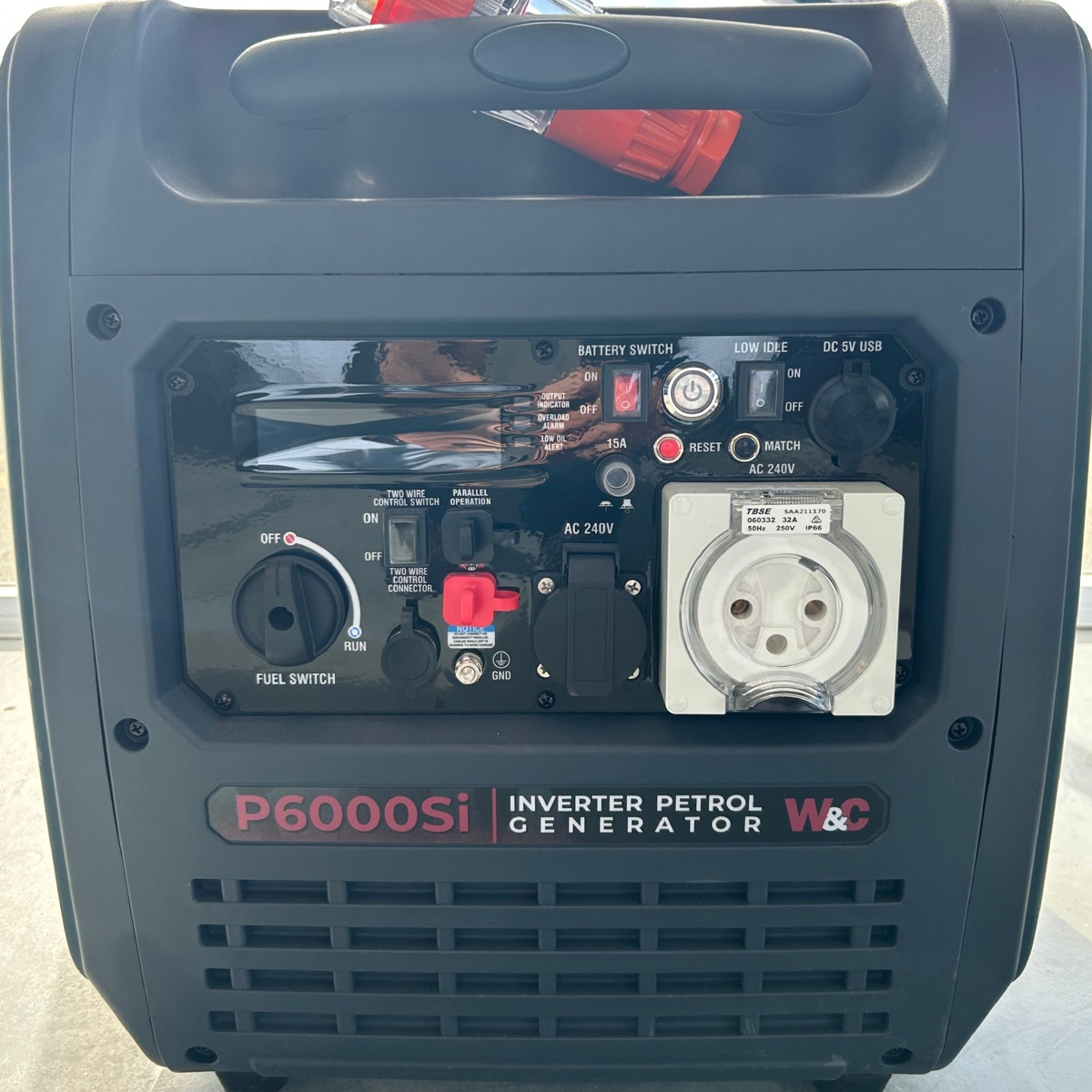
- generator sizing for your actual pumping load
- pump and storage planning so water keeps moving during an outage
- designing resilience into new installs so it’s not a costly add-on later
Get in touch and we’ll work through your current setup and the easiest wins to make it outage-ready.
Stock water systems (tanks, pumps, reticulation)
https://www.waterforce.co.nz/water-for-food/stockwater
Engineered solutions (switchboards, pump stations, fit-for-purpose builds)
https://www.waterforce.co.nz/water-for-industry/engineered-solutions
.jpg)