If you’re running an irrigator, it’s easy to assume it’s doing what you set it up to do. Over time though, nozzles wear, pressures change, and small issues creep in that you can’t always see until it’s too late. A catch can test is one of the easiest ways to check what your irrigation system is actually doing. It shows how much water is hitting the ground, how evenly it’s being applied, and whether the system is still performing as it should. Whether you’re running a centre pivot, linear move, or another irrigation setup, catch can testing gives you real numbers, not guesswork. Catch can testing can also be a useful part of irrigation evaluations in horticulture, viticulture, lawns, and sports fields.
Why catch can testing matters on New Zealand farms
In New Zealand, getting irrigation right isn’t just about pasture growth. It also affects:
- Power and pumping costs
- Nutrient losses through drainage or runoff
- Pasture consistency and crop yields
- Compliance and farm environment plans
That’s why Irrigation New Zealand recognises catch can testing as best practice. Many irrigation schemes and councils also use it as a performance metric to support good irrigation management. For pivot and linear irrigators in particular, catch can testing helps confirm water is being applied evenly across the paddock, not too much in some areas and not enough in others.
How a catch can (bucket) test works
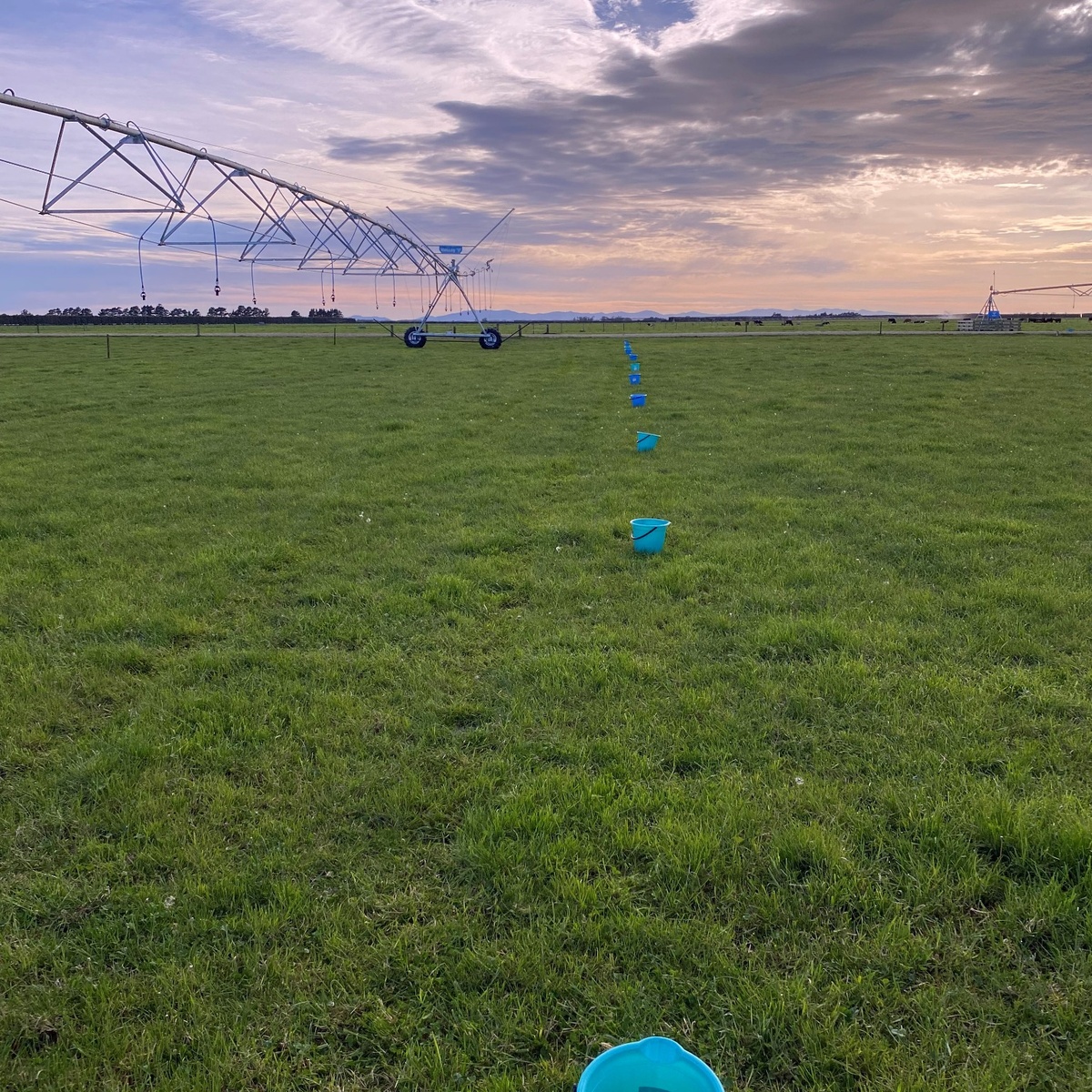
A catch can test is simple. Catch cans are placed under the irrigator at set spacings. The machine is run for a measured time, and the water collected in each can is measured. The results show how evenly and accurately the irrigator is applying water from one end of the machine to the other. Once the results are laid out, any problems are usually very clear.
What a catch can test tells you
How much water you’re applying
This confirms whether the irrigator is applying the depth of water you expect, based on speed, nozzle setup, and control panel settings.
How fast the water is applied
Application rate is especially important on lighter soils or slopes. Even if the total depth is right, water applied too quickly can lead to runoff, drainage, and nutrient losses.
How even the coverage is
Uniformity shows how evenly water is spread across the paddock. Poor uniformity means some areas are overwatered while others miss out. In calm conditions, a well set-up pivot or linear irrigator should usually achieve above 80% uniformity.Put simply, a catch can test shows whether your irrigator is doing what you think it’s doing.
Common issues catch can testing picks up
Catch can results often point directly to practical problems, such as:
- Blocked, worn, or incorrect nozzle sizes
- Pressure loss along the machine
- Worn regulators
- Missing or damaged sprinklers
- Leaks in boots or pipework
- Incorrect speed or control panel settings
- Incorrect pressure being delivered to the machine
These issues often develop slowly and are easy to miss. Left unchecked, they can increase running costs and reduce pasture or crop performance.
Quick tests vs full tests - which one do you need?
At catchcan.co.nz, catch can testing is offered as quick tests (calibration test) or full tests (performance audit), depending on what you’re trying to achieve.
Quick catch can tests (Uniformity and application rate Calibration test)
Quick tests provide a fast health check of your irrigator. They are not designed to be full irrigation evaluations, rather, they give a snapshot to check you’re on track. They:
- Use fewer catch cans
- Take less time to run
- Pick up obvious uniformity or application issues
Quick tests are well suited for:
- Seasonal start-up checks
- Routine in-season monitoring
- Checking performance after minor repairs
- Keeping an eye on systems you already know well
They’re a cost-effective way to catch problems early.
Full catch can tests ( Uniformity and application rate Performance Audit test )Full tests provide a more complete picture of irrigator performance. They align with the Irrigation New Zealand Code of Practice and are the tests typically required under water consents or by irrigation schemes. full tests:
- Use more catch cans
- Measure performance across the full length of the machine
- Provide detailed uniformity, depth, and application rate results
Full tests are best for:
- New system commissioning
- Ongoing performance issues
- Major changes to nozzle packages or pressures
- When you need full confidence in system setup
A full test gives you the detail needed to make bigger decisions.
Why both tests are useful on-farm Quick tests and full tests work best when used together. Quick tests help you keep track of performance through the season, while full tests provide the deeper detail needed for system setup, troubleshooting, and long-term efficiency. This approach aligns with Irrigation New Zealand best practice and helps avoid bigger problems down the track.
Better irrigation starts with knowing what’s happening Good irrigation isn’t about putting on more water — it’s about applying the right amount, evenly, and at the right time. Catch can testing gives you clear, practical information you can act on. It helps reduce waste, protect nutrients, and get the most out of your irrigation system.
Find out more If you want to check how your irrigator is really performing, or whether a quick test or full test is right for your farm, visit catchcan.co.nz to learn more. A simple test can save water, power, and headaches later on. If you need support on-farm, in a vineyard or orchard, or for more complex catch can testing or full system evaluations, contact our team to discuss how we can help.
.jpg)